Context
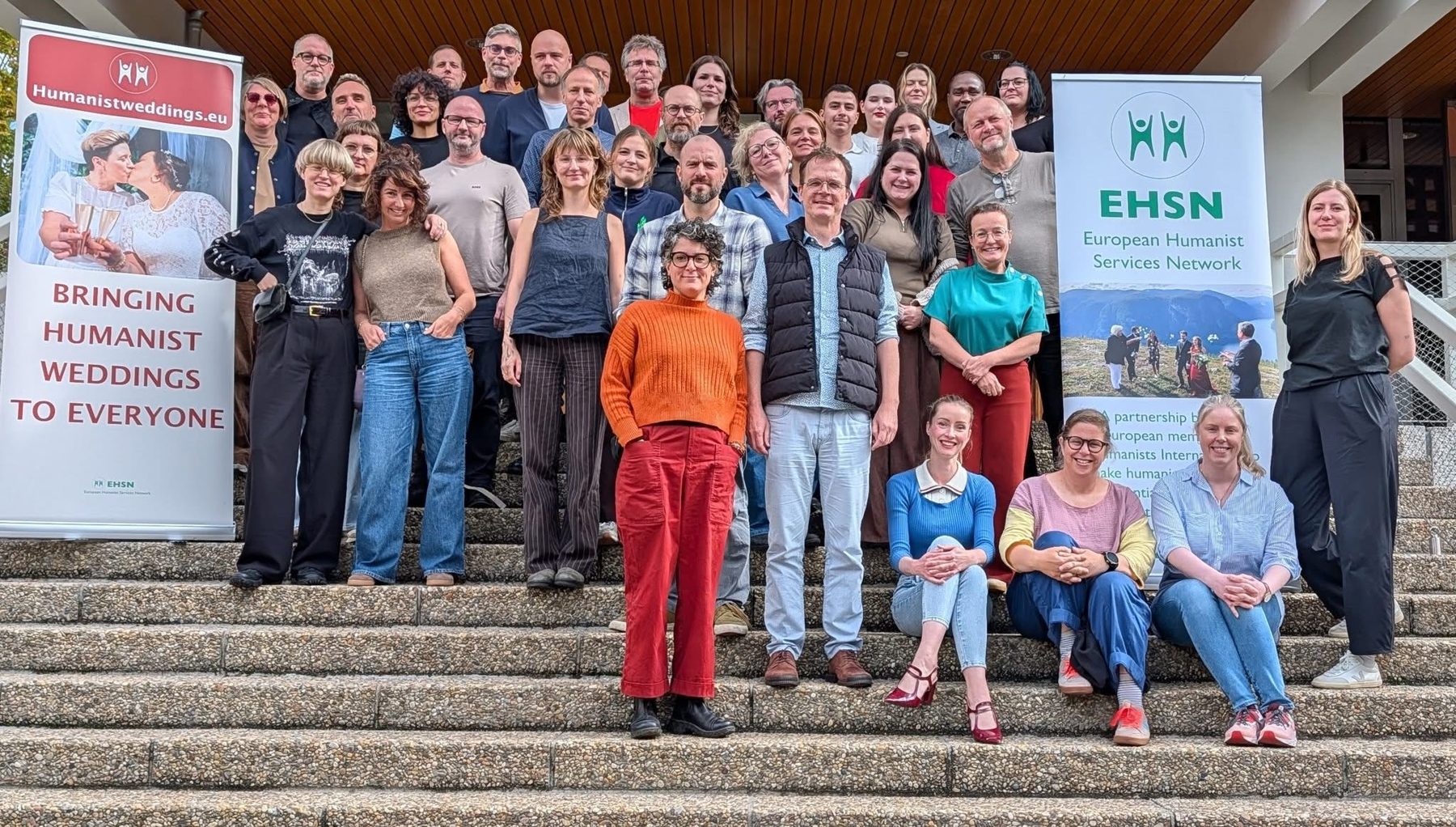
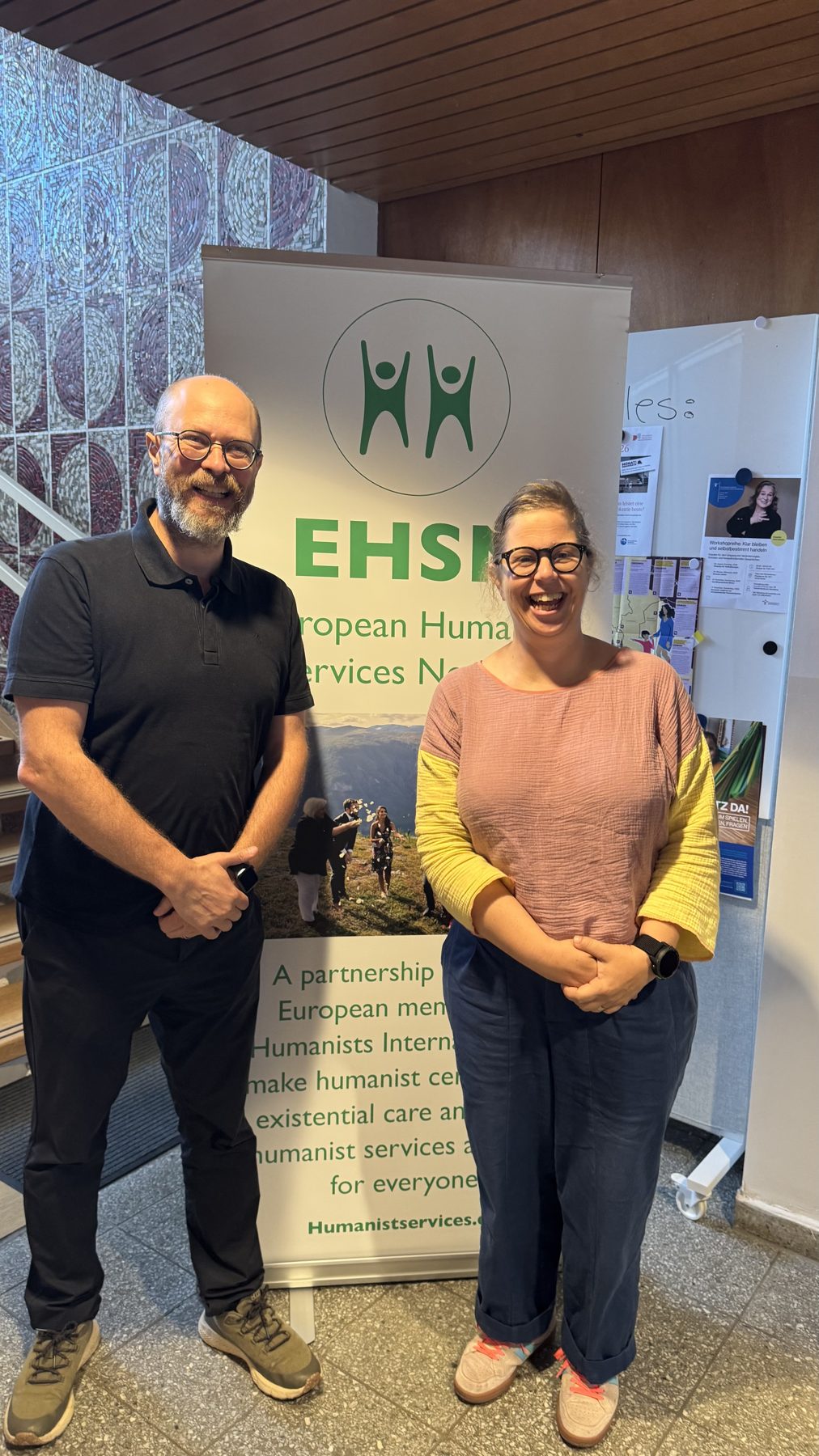
On 16 and 17 September 2026, Tanja Frank and Bob Reuter represented AHA Lëtzebuerg at the Working Seminar of the European Humanist Services Network (EHSN), hosted by the Humanistische Hochschule Berlin, the university of the Humanistischer Verband Berlin-Brandenburg, on its campus on Grabbeallee in Pankow. For a small association like AHA, these seminars are where the European standards it signs up to are actually shaped, and where it can draw on the experience of organisations that have been offering humanist services for decades.
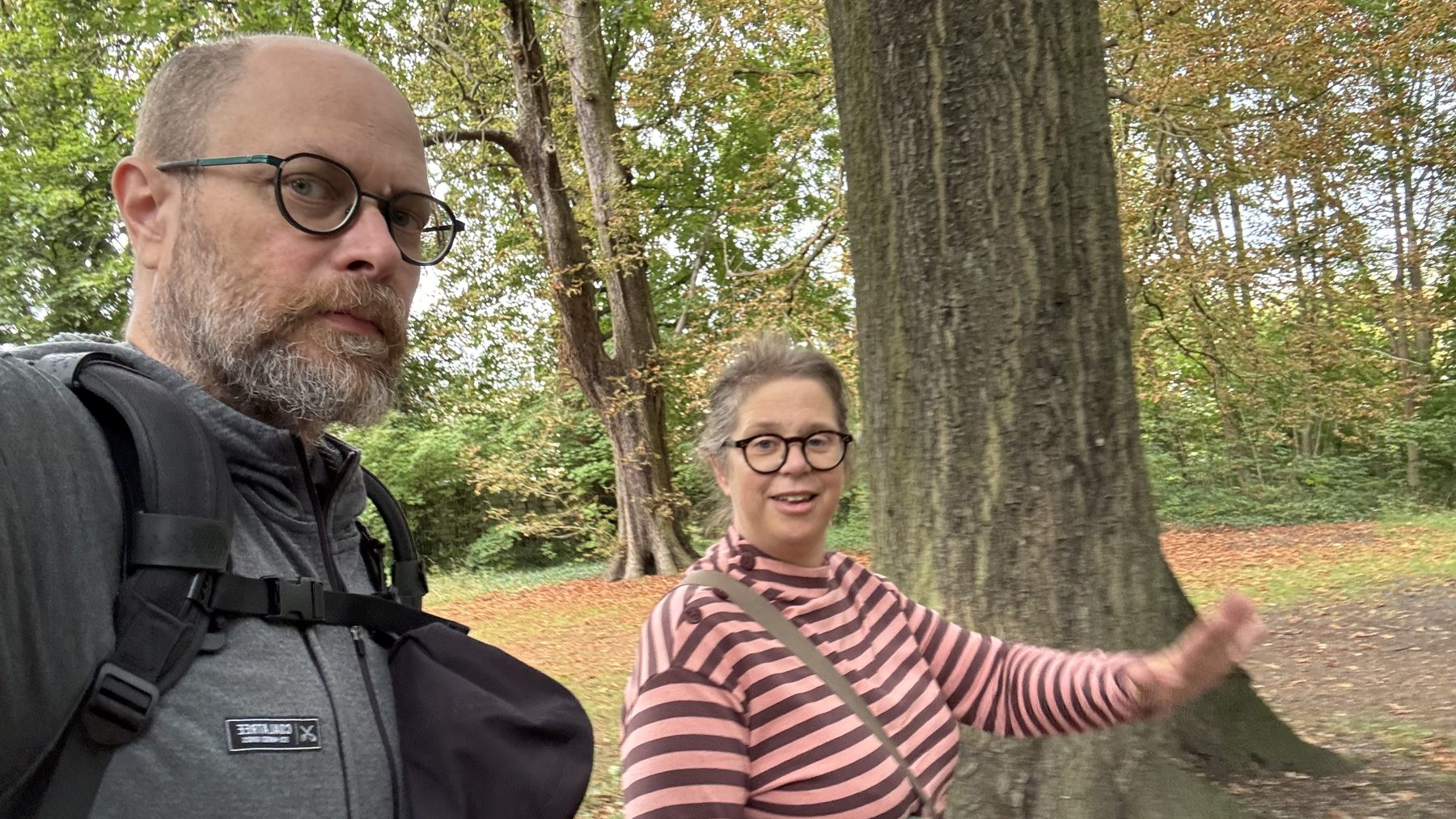
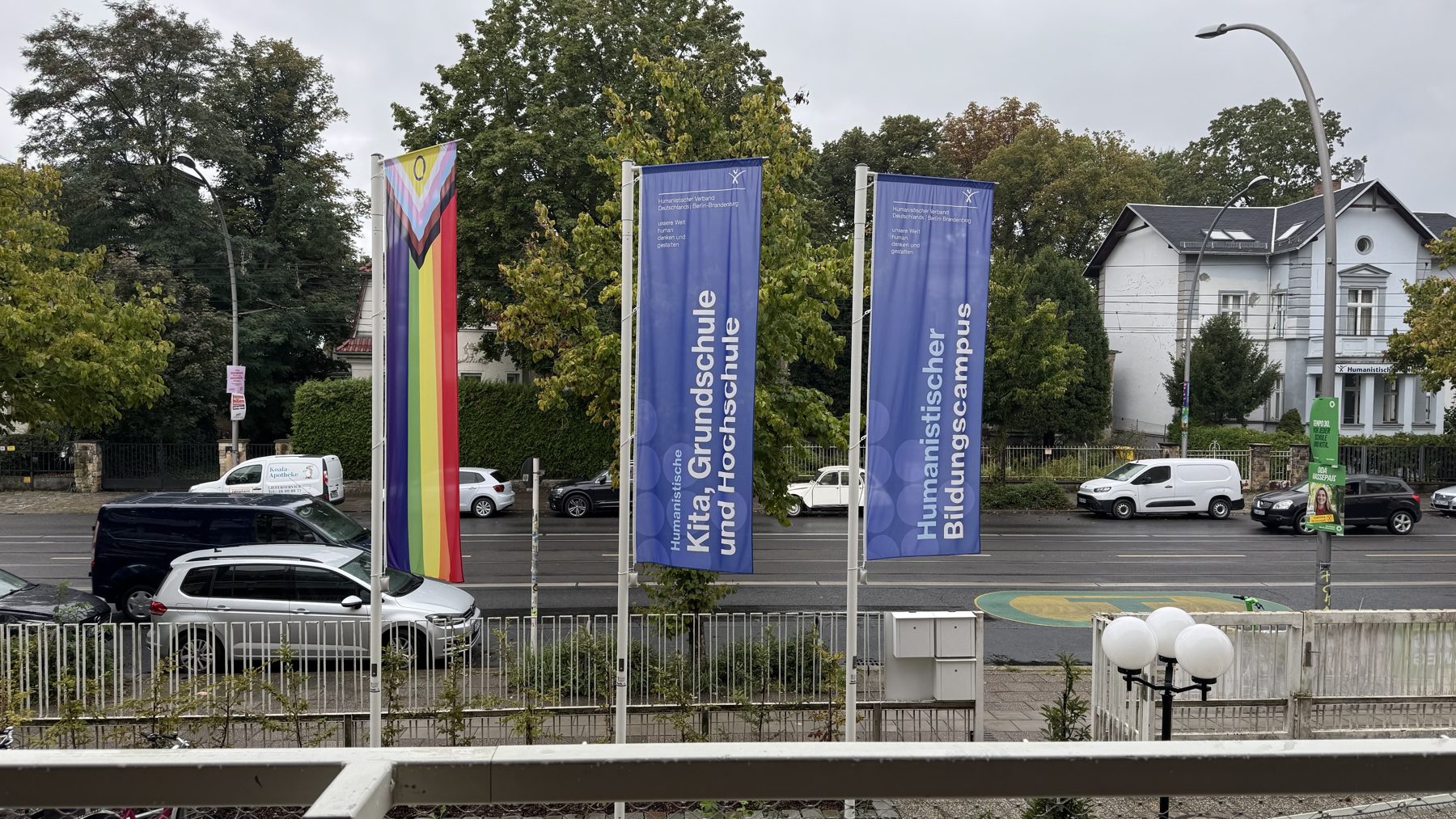
After a welcome and a presentation of the Hochschule, the programme alternated between plenary moments and four parallel working groups: ceremonies, youth, existential care and fundraising. It closed at midday on the second day with a joint plenary in which each group presented its plans for the coming year. Bob spent most of his time in the working group on the training and accreditation of humanist wedding celebrants, which met three times, and then joined the group on funeral celebrants. Tanja Frank spent her time in the working group on humanist existential care, a topic AHA will take further when it hosts the EHSN Autumn School on humanist-existential care in Esch-sur-Alzette from 26 to 30 October 2026. With only two delegates, AHA could not attend the working groups on youth work and education and on fundraising. Between these sessions, two plenary contributions widened the lens: Christian Lisker (HVD) on storytelling, and Prof. Ralf Schöppner on humanism as a politics of balance. This report is organised by theme: the working group on ceremonies, the working group on existential care, the plenary sessions, and finally what the seminar means for AHA’s work in Luxembourg.
Working group on humanist ceremonies
Bob Reuter took part in the EHSN ceremonies group, coordinated by Even Gran. It met three times on weddings and once on funerals.
Weddings, session 1: a shared European eLearning course
The first working session put a concrete object on the table: a proposed eLearning course for humanist wedding celebrants, presented by Tale and Eivind of the Norwegian Humanist Association (HEF). Partners had been able to review it before the seminar. The ambition is to make it a shared European resource, and the group was asked to examine it critically from the standpoint of its future users.
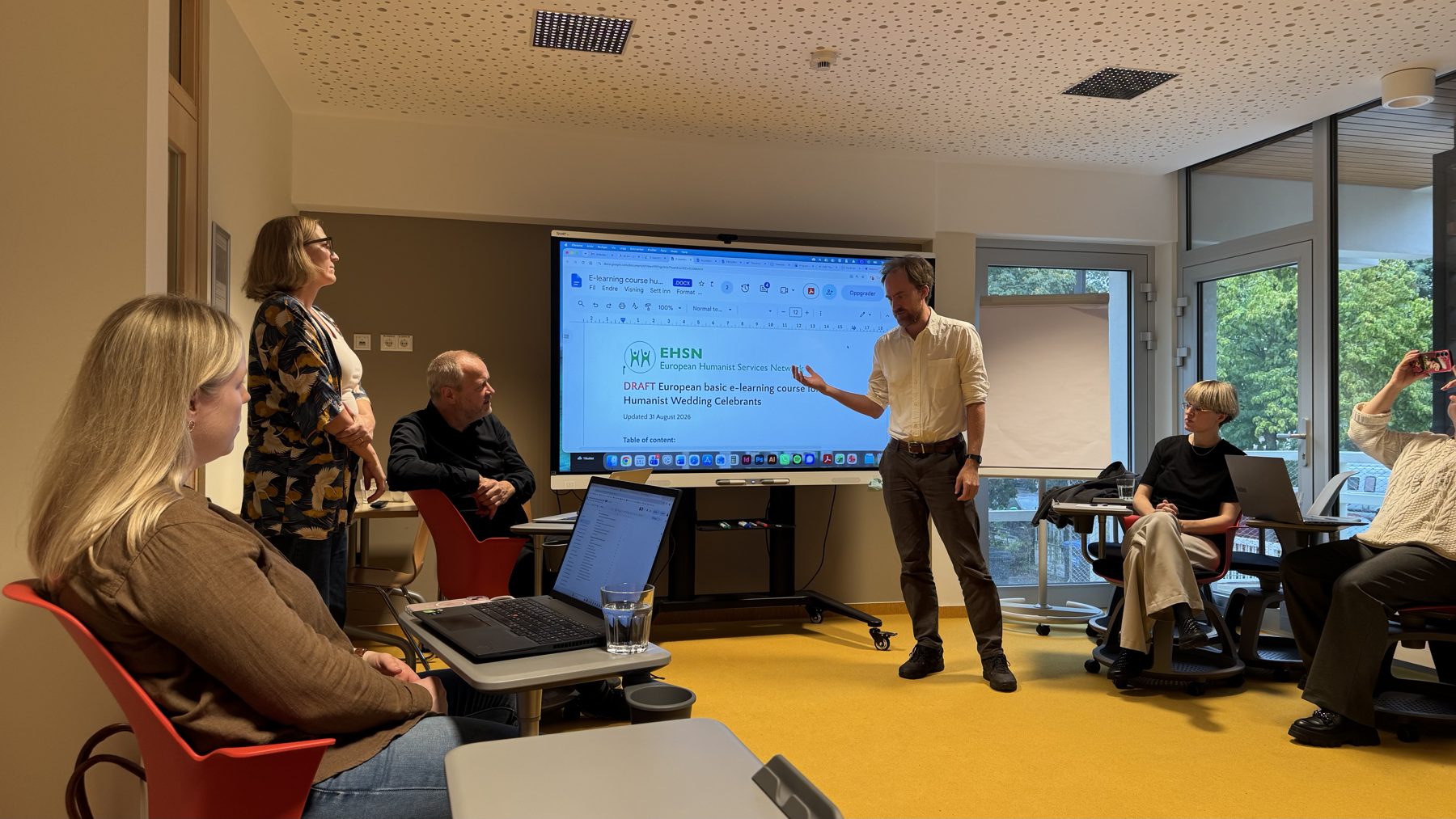
The discussion was structured around a few plain questions:
- Is such a course valuable for national activities, and how would each organisation actually use it locally?
- What is good in the current proposal?
- What is missing?
- How can it be improved?
Many partners saw such a course as a useful way to train more celebrants. Several substantive points emerged from the discussion:
- The course should say more about the philosophical ideas underpinning the humanist life stance, and about how these ideas shape humanist wedding ceremonies.
- It should make clearer how humanism as a life stance differs from other philosophical, ideological or religious views that may also draw on humanist values.
- Each partner should decide whether, and which parts of, the course to implement nationally.
- In-person gatherings remain important, and the course should give advice on organising them alongside the online material.
- Completing the course must never, by itself, accredit anyone. As the wedding standard states, the authority to accredit individual celebrants always lies with the national EHSN partner.
- Some wording needs to change: “procession”, for instance, carries religious connotations.
Two conclusions came out of the session. First, most partners will want to adapt the material to their national context and translate it rather than use a joint course in English. The course will therefore be presented primarily as a menu of modules that partners can pick from and adapt, with a joint English version as a secondary option. Second, following the logic of the wedding standard, the course will distinguish between “requirements” (mandatory parts) and “recommendations” (optional ones). Even Gran, who coordinates the EHSN ceremonies group, will prepare an updated proposal and invite partners to a follow-up meeting.
Weddings, session 2: improving the course
In the second session the group moved from evaluation to editing and worked directly on the online course. Its main structural proposal was to split the first part into two distinct units:
- Introduction to the course: what the course is, how it is organised, what learners can expect.
- Introduction to the topic: what humanist ceremonies are, and why they matter.
Within the introduction to the topic, the group asked for two substantive additions:
- The human significance of rituals and ceremonies should be made far more visible. Marking the important transitions of life is a deeply human need, not a religious one. Religions have historically occupied this space, but they do not own it. This point is essential for celebrants, who will regularly meet couples or relatives who feel that a non-religious ceremony is somehow a lesser substitute.
- Humanism as a life stance deserves a more substantial treatment. A celebrant does not need to be a philosopher, but should be able to say clearly what humanism is and why a ceremony is “humanist” rather than merely secular or civil.
Both additions speak directly to a criticism humanist organisations often hear: that humanist ceremonies are an “Ersatzreligion”. A course that explains why rituals belong to humanity as a whole, and grounds the ceremony in an explicit life stance, gives celebrants the arguments to answer it calmly.
Following the seminar, Bob Reuter sent Even Gran an extensive written feedback document on the draft course. It covers two dimensions:
- Content: suggestions to strengthen the subject knowledge the course conveys.
- Pedagogy: proposals to make the course more engaging, with more active learning activities, so that it becomes a genuine learning experience rather than a textbook put online.
Weddings, session 3: a European book on humanist weddings
In the third session, Maria of the Italian Unione degli Atei e degli Agnostici Razionalisti (UAAR), a member of the EHSN Accreditation board, presented the board’s idea of turning the material gathered during the wedding accreditation process into a joint book. Its aims, as she presented them, would be to spread humanist ceremonies through civil society and inspire people, to take a picture of the present while keeping a record of the past, and, more generally, to spread ideas and reach people who do not yet know that such ceremonies exist.
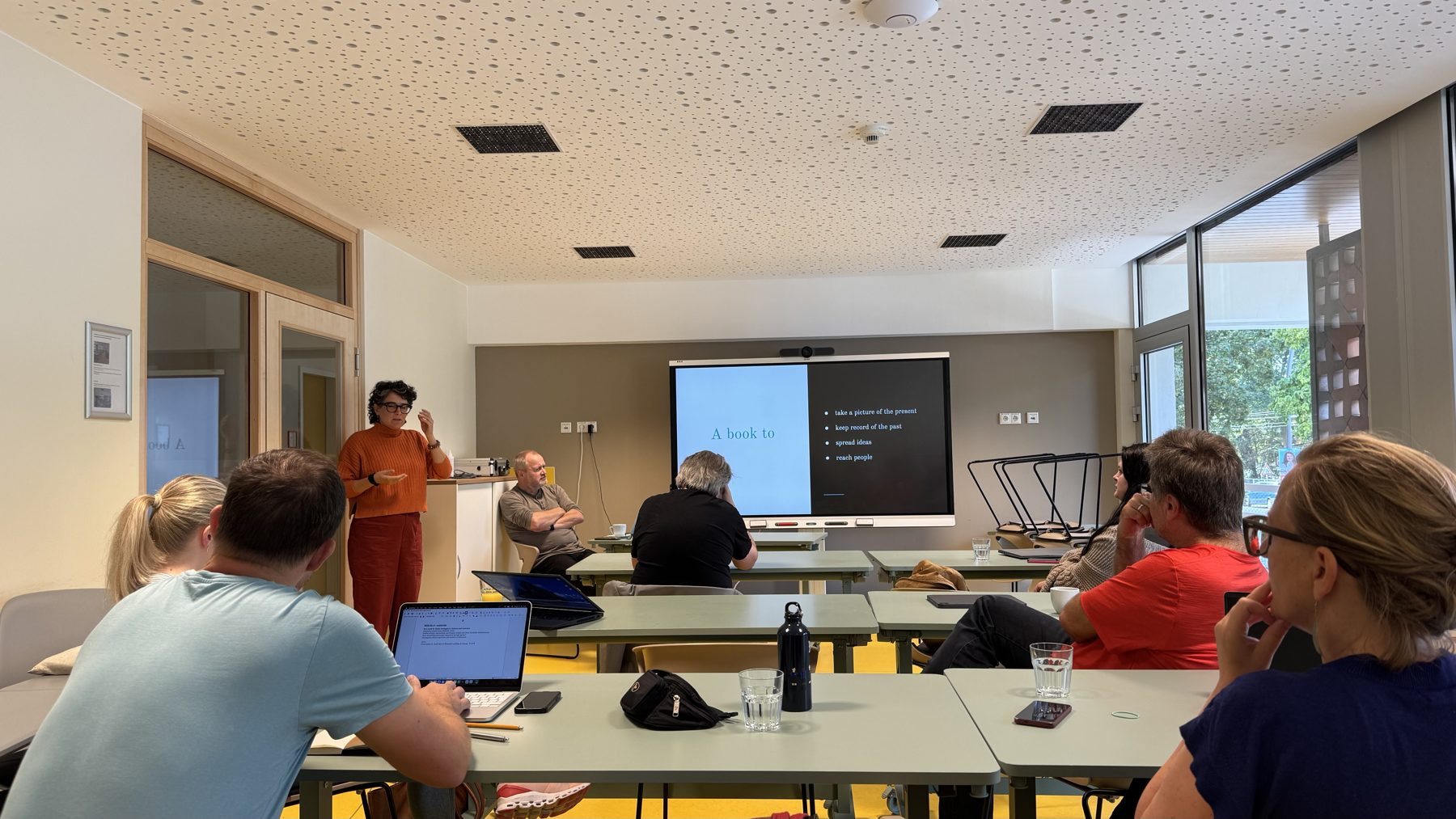
The raw material would come from the accreditation interviews that member organisations have already conducted, which cover training, projects and day-to-day work, as well as experience, advocacy, innovation and the character of the celebrants themselves.
Maria outlined the steps such a project would need:
- Writing: choice of language(s), structure and content.
- Editing, printing and publishing.
- Financing.
- Finding contributors.
The discussion that followed focused less on logistics than on fundamentals: what exactly the book is for, why it matters, and who it is for. The group settled on a fairly clear answer. The publication should serve as a report on how humanist weddings are currently practised across Europe, published as a book that can be cited, and need not be expensive; UAAR already has experience with this kind of publishing. Maria and Tale (HEF) will explore how the material can be assembled and present a proposal at a later stage.
The group also stressed a less obvious audience. A book documenting how humanist weddings are celebrated today would become a potential source for academic research, for anthropologists and historians now and in the future. It would make humanist practices visible to the rest of the world and preserve a record of them. This effect should not be underestimated: ideas also spread through scholarly channels, and a movement that documents its own practices makes it far more likely that they will be studied, cited and taken seriously.
Funerals: training and accreditation
A separate session turned to the proposed funeral standard. The approach mirrors the one for weddings: the same accreditation board will handle both, and the draft is, for now, largely modelled on the wedding standard. The group also spent time on why such a standard is needed at all, and on how the network should relate to funerals arranged privately, outside the organised movement.
The main outcomes were:
- The discussion led to changes in the seven requirements at the start of the standard. There was no time to discuss the rest of the document or the accreditation protocol, so the work continues, and the standard will be approved at a later stage.
- A humanist funeral may take place in a church, provided the use of the building is contextualised in line with the principle behind point 6 of the standard.
- Point 7 is currently read as requiring the celebrant to be physically present for a ceremony to count as humanist. This interpretation was debated and will be taken up again at the next meeting.
Susanna Leino (Finland), who could not attend, has shared a report on humanist funerals in Finland.
In his written summary, Even Gran added his own view on the purpose of the standards. The network standardises humanist ceremonies on behalf of the organised international humanist movement, according to its understanding of humanism as a non-religious life stance in its own right. Others may define humanism differently and offer ceremonies independently, which is legitimate; but one aim of the EHSN standards is to establish humanist ceremonies as a recognisable brand in Europe.
One question in particular was raised: can, or should, humanist celebrants conduct a funeral for a “very, very bad” person? It is a hard question precisely because humanist funerals are built around celebrating a life and honouring the person. A ceremony that glosses over serious harm could be dishonest towards victims and mourners alike; refusing it could contradict the humanist commitment to human dignity and to the needs of grieving relatives, who are not responsible for the deceased’s actions.
Other outcomes
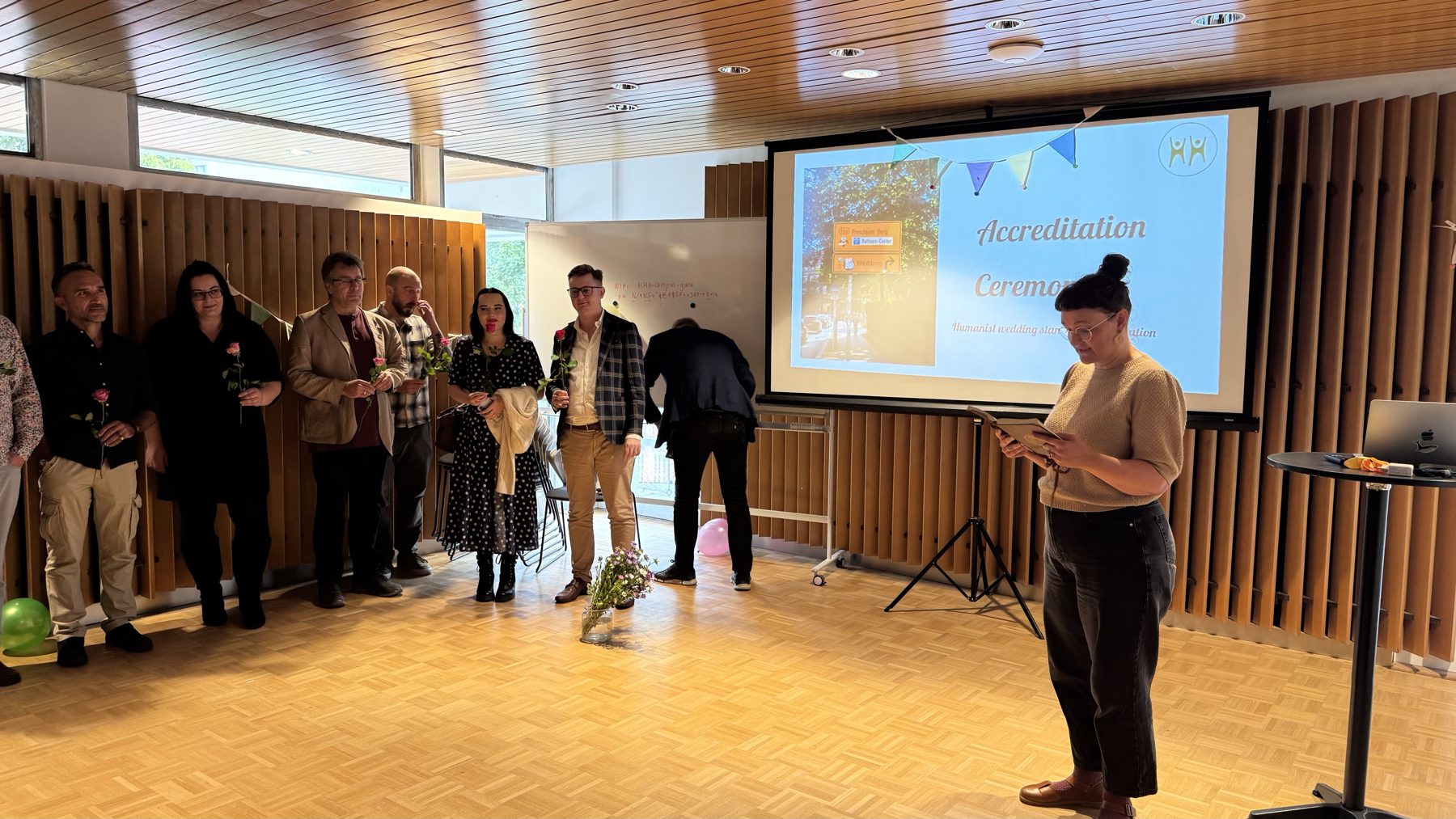
- Accreditation diplomas. On the afternoon of the first day, nine EHSN partners received their accreditation diplomas for the wedding standard, in a newly invented ceremony involving soap bubbles.
- Spring 2027 seminar. Partners agreed to meet in person next spring for a dedicated seminar on the eLearning course and the network’s other ceremony work.
- Next steps. Even Gran will convene a digital follow-up meeting within a few weeks. Photos from the seminar have been published on the EHSN website.
Working group on humanist-existential care
In parallel, Tanja Frank took part in the working group on humanist-existential care, coordinated by Dr Lindsay de Wal. The group already has European standards for humanist-existential care, which describe good professional practice for practitioners themselves: how care should be delivered, the values and principles behind it, ethical and professional expectations, and the knowledge, skills, reflection and ongoing development expected of someone working in the field.
Over the two days, the programme gave the group four sessions: writing the accreditation framework linked to the standards and setting up an accreditation board; training routes for developing existential care; online educational possibilities; and, on the second morning, a peer support session on what organisations struggle with most on the way to accreditation and how EHSN can help.
In Berlin, the group turned to the next step, in line with the other EHSN working groups: accreditation standards, which concern the humanist organisations rather than individual practitioners. The guiding question is what structures, processes and safeguards an organisation needs if it wants to train, recognise, support or accredit humanist-existential care practitioners locally. Candidates include:
- training pathways and assessment;
- supervision, mentoring and continuing professional development (CPD);
- complaints procedures and ethical frameworks;
- practitioner support and record keeping;
- processes for reviewing professional standards over time.
The intention is not to create a European body that takes accreditation away from national organisations, but to give them a shared framework and practical tools to apply in their own countries. The ceremonies group, whose wedding accreditation framework produced its first accredited organisations during the seminar, serves as the model. The framework is meant to stay “breathable”, recognising cultural, legal and professional differences between countries while agreeing on common foundations. If it works, it could make training routes clearer, help organisations that are only beginning to offer existential care, recognise existing experience and qualifications, point to where further development is needed, and strengthen the professional credibility of humanist-existential care internationally.
The group began developing an accreditation working document in Berlin, which remains very much work in progress. Partners are invited to comment on it before the next online meeting. Lindsay de Wal also proposed more regular online meetings between annual gatherings, and an opt-in mailing list for the group, for which members’ explicit consent will be collected.
The next step for the group is the Humanist-Existential Care Autumn School, which AHA hosts in Esch-sur-Alzette from 26 to 30 October 2026. It is free to attend, with participants covering their own travel and accommodation. There will be no livestream, but a selection of sessions will be recorded, with speakers’ consent, for a new Humanist-Existential Care YouTube channel.
Plenary sessions
Christian Lisker on storytelling
In a storytelling workshop after lunch on the first day, Christian Lisker of the Humanistischer Verband Deutschlands – Berlin-Brandenburg reminded participants that humans make sense of the world through stories, and that humanist organisations are no exception. They tend to communicate through arguments, positions and facts; people, however, connect through narratives.
Three ideas stood out:
- Good stories include vulnerability. A story that only shows strength and certainty does not invite anyone in.
- Stories carry sense, meaning and connection. They are how values become recognisable in a life rather than remaining abstract principles.
- Organisations need stories too: not slogans, but moments that people can relate to.
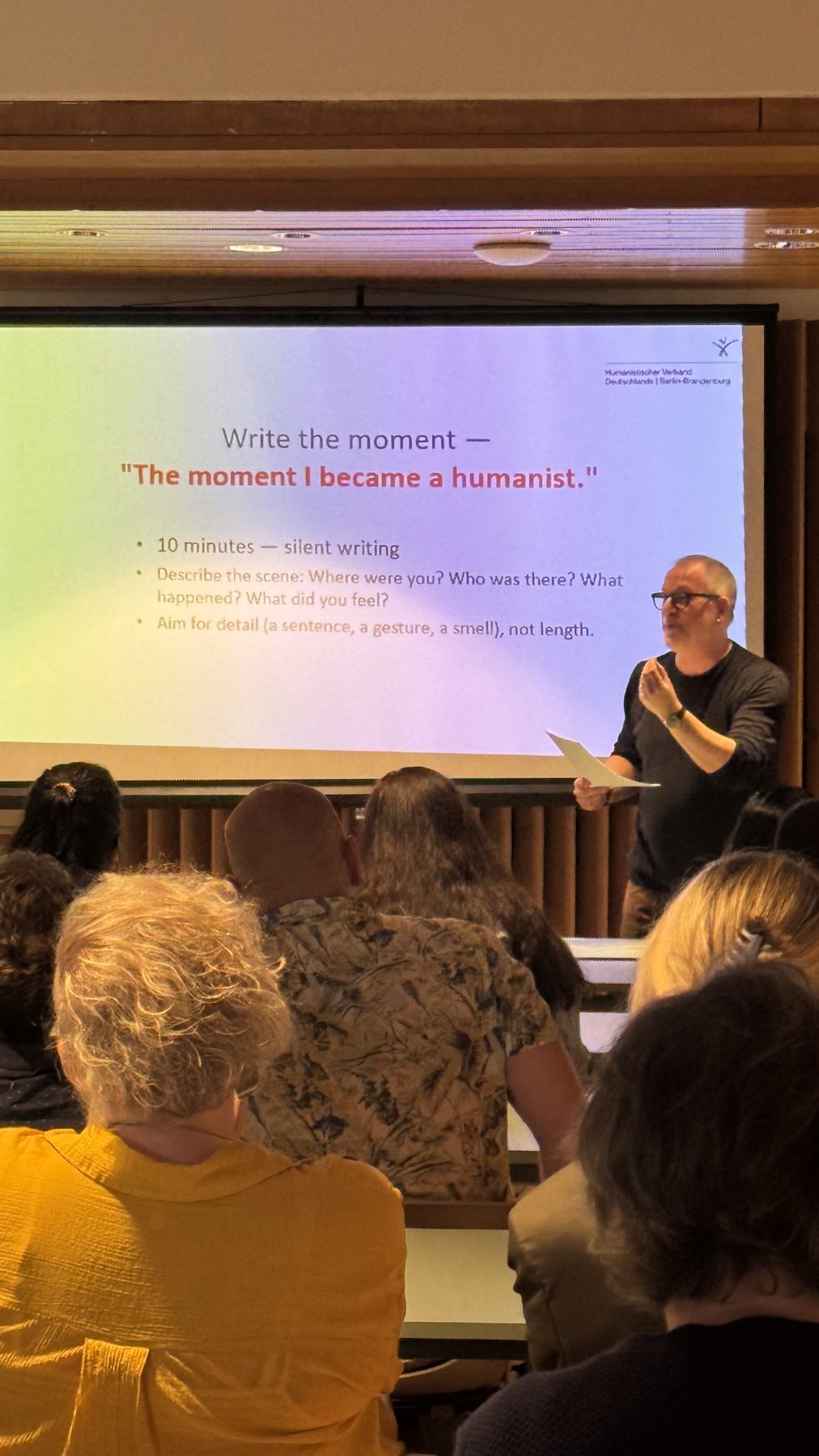
Lisker then gave participants a writing task: “Write the moment: the moment I became a humanist”. Ten minutes of silent writing, describing the scene: where were you, who was there, what happened, what did you feel? The instruction was to aim for detail, a sentence, a gesture, a smell, rather than length. It is a simple exercise, but it forces participants to locate their convictions in a lived experience rather than in an argument.
Ralf Schöppner on humanism as balance
The second day opened with a lecture by Prof. Dr. Ralf Schöppner, professor for the theory and history of humanism and vice-rector for teaching at the Humanistische Hochschule Berlin, under the title “Balance and resistance: two political orientations within humanism”. His thesis: balance is the primary political position of humanism.
Schöppner did not dismiss resistance. Humanists must resist when rights and dignity are threatened. But he argued that their distinctive contribution is something else: they bring balance to the table. Political conflicts are often highly complex, and taking sides is rarely as easy as it looks. Rather than simply joining one camp, humanists can act as moderators who build bridges, defend a pluralistic debate, and do not expect everyone to agree with them on how to lead a good life. Above all, humanists should not add to polarisation, and should resist simplistic simplifications.
He described a dual and open identity for humanist organisations. They represent the interests of non-religious people, yet cannot be reduced to identity politics: they work for everyone and for the common good.
This balancing, he argued, requires five capacities:
- Distinguishing the good from the just. The good is particular (one’s own vision of a good life); the just is general (what must hold for everyone).
- Taking oneself seriously, but not too seriously.
- Defending an inclusive public debate, including on problematic and heated issues.
- Suspending judgement from time to time. Humanists do not need to form quick opinions on everything and make them public. Asking politely how someone arrived at their opinion is often more productive than countering it.
- Renouncing partisanship. This is not neutrality: taking sides is allowed, but it is not enough. It must be complemented by a respectful consideration of other positions, and by enough distance from one’s own opinions to assess and revise them critically.
What this means for AHA Lëtzebuerg
The seminar came at the right moment. Applications for AHA’s first celebrant training are open until 1 November 2026, the training weekend is set for 16–17 January 2027, and AHA hosts the existential care Autumn School at the end of October. AHA was not yet among the nine partners accredited in Berlin, so the European work feeds directly into what it is still building.
Ceremonies
The eLearning discussion was anything but abstract for AHA. The association is about to train and certify Luxembourg’s first cohort of wedding celebrants, under the EHSN European Humanist Wedding Standard and with two experienced trainers from deMens.nu. A shared course could prepare participants before the face-to-face weekend, and later serve as a common reference for the peer learning community AHA wants to build among certified celebrants. Resting the training on a common European foundation also lends a small association credibility.
The modular approach suits Luxembourg well, since AHA trains in French and would have to adapt and translate in any case. The flip side is cost: for a small, volunteer-run association, adapting modules is real work, and a menu only lowers the barrier if the shared core is substantial. The principle that the course never accredits anyone by itself matches AHA’s model, in which the association certifies its own celebrants. AHA’s own feedback on the course stresses that pedagogy matters as much as content: an online course only works if learners actively do something with what they read. The course would also gain from defined learning outcomes and a simple evaluation, so that the network can improve it on evidence rather than impressions.
The book’s value as a documentary source is a strong argument for it, and it reconciles the two aims: a citable report on current practice is precisely what reaches researchers and, through them, a wider public. Two conditions follow. The accreditation interviews were gathered to assess organisations, not for publication, so reusing them requires explicit consent from those interviewed. And to be useful to anthropologists and historians, the book should be transparent about its sources: which organisations and countries are covered, when and how the material was gathered, and what it leaves out.
The funeral standard is a likely next step for AHA once its wedding celebrants are in place. Copying the wedding standard is a pragmatic start, but funerals differ sharply: days rather than months of preparation, grieving families, a person who can no longer state their wishes, and cooperation with undertakers. Grief support and working under time pressure should appear explicitly in the final standard. The “very bad person” question also calls for a shared principle rather than case-by-case improvisation. One candidate: the ceremony serves the mourners, it must be truthful without eulogising harm, and the individual celebrant keeps the right to decline. AHA will raise both points in its feedback to Even Gran after internal consultation.
Existential care
The accreditation framework is promising, but its central tension deserves attention while the working document is still open. The more “breathable” the framework, the less a shared accreditation tells hospitals, care homes or public authorities about what they can expect. Safeguards such as supervision, complaints procedures and CPD also presuppose an infrastructure that small, volunteer-run associations may struggle to provide. Both points matter if AHA wants to build existential care in Luxembourg on this framework.
Public positioning
Schöppner’s lecture was a useful mirror for an association whose public visibility comes largely from critical positions on the relationship between state and religion. His thesis also leaves questions open. Balance can slide into false equivalence when one side of a conflict denies the other’s rights. His own distinction between the good and the just suggests where the line runs: pluralism about visions of the good life, firmness on what justice requires for everyone. And a moderator is only credible if others do not see it as a party. AHA is, by its mission, a party in debates on state and religion, so it needs to be clear about when it speaks as an advocate and when it offers itself as a bridge-builder.
The same lens applies to Even Gran’s view that the EHSN standards should establish humanist ceremonies as a recognisable brand on behalf of the organised international humanist movement. Defining a quality standard for one’s own services is compatible with pluralism; asserting ownership of the word “humanist” sits less easily with it. The claim is more convincing when it rests on the demonstrable quality of the services.
Lisker’s talk suggests a practical idea: collecting “the moment I became a humanist” stories from members and celebrants, with their consent, could make AHA’s communication warmer and more credible than statements of principle. One caveat: stories persuade regardless of whether they are true, so for an organisation committed to evidence they should complement its arguments, never replace them.
An invitation to members
Berlin also showed the limits of a two-person delegation. Two of the four EHSN working groups had no one from Luxembourg at the table:
- Youth work and education, which works on youth recruitment and engagement, coming-of-age activities and shared projects such as summer camps.
- Fundraising, which explores joint and EU fundraising and peer-to-peer support between organisations.
AHA would love to see more members join its European work, represent Luxembourg in these groups and help develop these activities at home. You do not need to be a member of the board to contribute. If you are interested, get in touch with the board at